What CERAWeek 2026 Says About Energy’s Next Chapter
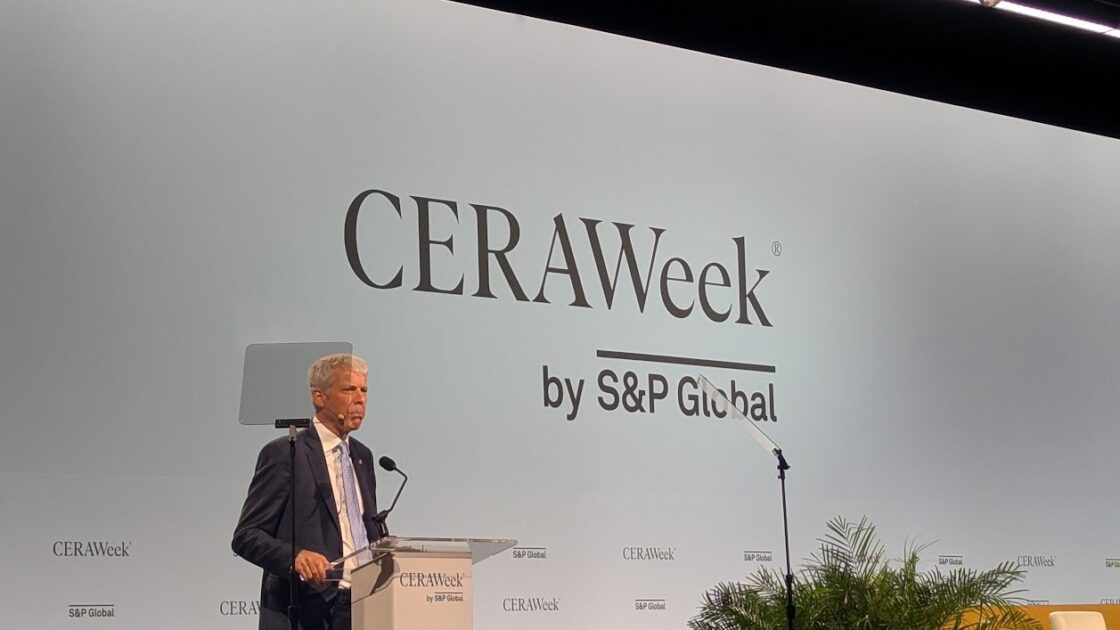

CERAWeek in Houston has become one of the most important annual convenings for energy providers, utilities, technology developers, policymakers, and investors.
The conversation at CERAWeek shifts each year. In 2026, the focus was on surging demand, disruptions to energy flows through the Strait of Hormuz, infrastructure bottlenecks, and a more pragmatic energy posture. The conference showed an industry and policymakers increasingly focused not on abstract narratives about the future of energy, but on the harder questions of security, buildout, reliability, affordability, and competitiveness.
In that context, natural gas was repeatedly framed as a U.S. strategic advantage, underscored by the fact that while international natural gas prices have spiked during the Strait disruption, U.S. domestic prices have barely moved.
From sessions on energy trade and infrastructure, AI demand growth and geopolitical security, industrial expansion, and consumer energy cost and deliverability challenges, I was struck by how many folks talked about natural gas as a durable and competitive asset for the United States and as a commercial strategy for companies.
Mike Wirth from Chevron said, “Gas is the foundation.”
David Lawler from Caturus added, “What we’re seeing, maybe, is just the very beginning of the role of natural gas, not only in America, but in the world.”
U.S. Secretary of Energy Chris Wright opened the conference with “Energy is life,” then quickly turned to natural gas. “America’s superpower is natural gas,” he said, pointing to its role in industry, heat, electricity, fertilizer, exports, and leading AI and manufacturing. He also highlighted the record performance of natural gas storage during Winter Storm Fern. His message was clear: pragmatism and resilience, and gas as essential infrastructure.
There was broad agreement that the U.S. is not short of resources. There was also agreement that the binding constraint is infrastructure buildout, especially permitting bottlenecks. And that reform is needed.
Chad Zamarin of Williams put it plainly: “Ten years ago, we were building three times the amount of electric transmission lines that we will build this year. Ten years ago, we were building three times the amount of pipeline capacity that we will this year, at a time when we need more than we’ve ever needed.”
Infrastructure lag also translates into affordability. Zoe Yujnovich of National Grid, discussing Fern and New York, said, “The cost of not having that [gas pipeline] capacity in the system does translate directly to affordability.”
Even the decarbonization discussion felt more pragmatic and infrastructure-focused. Wael Sawan from Shell said, “Our conviction is the mandate starts with the lights staying on, and energy bills coming down, and an increasingly decarbonized energy system,” and added that LNG is at “the heart of our strategy.”
Michele Harradence from Enbridge captured another thread on how new technology is integrated into work. AI will augment domain expertise, not replace it: “AI is not going to connect a meter, it’s not going to lay plastic pipe, and it’s not going to dig the hole. It’s going to maybe give us some ideas about how to do that better, but those folks who are doing that know how to do their work.”
My takeaway from CERAWeek 2026: the center of gravity is shifting toward execution and resilience. Industry strategy and policy priorities are being actively shaped by the realities of scale, timing, and infrastructure. The question is no longer what the energy system should look like. It’s whether we can build it fast enough. In that conversation, natural gas was not peripheral or temporary. It was foundational.