A Greater Impact
A Greater Impact
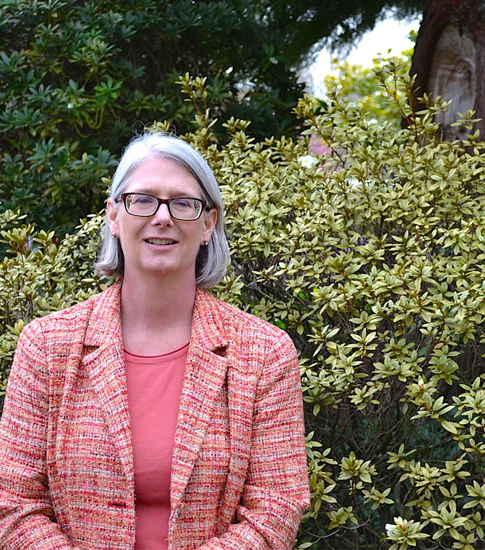
American Gas: Commissioner Rendahl, congratulations on your installation as president of the National Association of Regulatory Utility Commissioners for 2026. In November, you announced that your theme for 2026 is “Uniting Regulators, Harmonizing Impact: Advancing Reliable and Resilient Infrastructure.” Can you share how you plan to put this theme into action?
Ann Rendahl: Thank you. I am honored to serve as NARUC president this year. The theme, “Uniting Regulators, Harmonizing Impact,” was developed in partnership with First Vice President Jehmal Hudson of Virginia and Second Vice President Katie Sieben of Minnesota. It’s a three-year theme designed to create continuity across our terms as NARUC presidents. Each of us will have a specific focus, and this year’s focus is “Advancing Reliable and Resilient Infrastructure.”
As the work of state commissioners becomes more complex and demanding, our theme addresses how NARUC supports commissioners and staff; provides the guidance, training, and fellowship we need; and how we can work collaboratively and in partnership. When we all work together, NARUC has an even greater impact nationally and in our respective states and regions.
The theme is intended to align the diverse actions of state utility regulators so that the work of every state commission is part of a shared, coherent effort to meet the nation’s utility challenges and opportunities—together. It is not about uniformity, but about coordination, mutual reinforcement and strategic alignment—so decisions made in one state complement and support broader national goals, while still respecting state and regional differences. By harmonizing our impact, NARUC is positioned to be more than just a convener—it becomes a strategic force multiplier.
The focus on “Advancing Reliable and Resilient Infrastructure” is so important. No matter which state or region you serve, we are all facing the need to build and maintain utility infrastructure—natural gas, electric, water and communications—to serve increasing customer demand for service in an affordable way and to address reliability issues and infrastructure challenges.
The theme and focus underscore NARUC’s central mission of serving the public interest by improving the quality and effectiveness of public utility regulation, through empowering state utility regulators to lead collaboratively on national challenges.
This year, NARUC will explore the infrastructure needs for all utility services, how the industries support and rely on each other, as well as challenges in building and maintaining infrastructure that is safe, resilient and reliable. For example, to meet the growth in demand for natural gas and electric service for data centers, onshoring industry and associated economic development, we will continue to see a need for more electric generation of all kinds. It’s more pipes and wires to transport energy, as well as more transformers and compressors and other related equipment. However, we also need more pipes and wires for communications and water service. Data centers, industry and all customers rely on all these industries to drive economic development in communities—urban and rural.
For these industries, regulators face a variety of reliability and resilience challenges and headwinds, including:
- Disputes over permitting, siting and questions about who should bear the costs
- The availability of a skilled workforce to build and maintain the necessary infrastructure
- The complexity of grid resilience, as well as connectivity of defense critical infrastructure
- Pressures on reliable and resilient infrastructure, including the constant risk of cybersecurity, physical attacks, and the increasing risk of extreme weather and catastrophic events, including extreme heat, cold, wind, flooding, and wildfire. (On wildfire specifically, NARUC will finalize its wildfire workbook to help states and utilities address wildfire risk.)
These reliability challenges and risks have significant impact on utilities’ ability to finance and invest in the critical infrastructure this country needs, while placing additional pressure on affordability.
To activate our theme and focus, I will promote coordination across all utility sectors, peer learning and information sharing, and continued collaboration with federal agency parties. NARUC general sessions, committees and work sessions will provide opportunities for all of us to share what is working, what is holding us back, and where we need to work together to ensure safe, reliable and affordable utility service for all customers.
American Gas: You represented the Washington Utilities and Transportation Commission in your previous career in the state of Washington’s attorney general office, before joining the commission. How does your vast background and experience in the law inform your work as NARUC president?
Rendahl: Thank you for that question. Having both a master’s degree in public policy and a law degree helped me to effectively address both legal and policy issues at the UTC. In addition to representing the agency as an assistant attorney general, I served as an administrative law judge, director of the administrative law program, and director of the UTC’s policy and legislative division, representing the agency before the state legislature and providing guidance for the policy advisors to the commissioners. In all, I served in several different roles and worked on all the industries the UTC regulates for 21 years before becoming a commissioner.
Working at the staff level at a state commission taught me the value of teamwork and collaboration. As a leader, I did not achieve success in cases and projects on my own. The same is true at NARUC. The three-year theme of “Uniting Regulators, Harmonizing Impact” reflects this value of working together for successful outcomes.
The NARUC president is responsible for leading the association and its members, similar to the CEO of a board, as well as to provide creative direction for general sessions at the three NARUC meetings. As NARUC president, I’ll also be asked to speak for the association and its members on decisions and actions of the administration, federal agencies, Congress and the courts that may have an impact on NARUC members. My understanding of legal principles and procedures, as well as policy analysis and legislative affairs, provides a good foundation to evaluate and respond to these changes in law and policy.
However, as with my work as a leader at the UTC, I will not be acting alone. NARUC’s executive director, legal counsel and staff provide excellent analysis and advice on the impact of changes and proposed changes in law and policy. Other members of the NARUC staff put together the three national meetings, as well as professional development, tailored workshops and whitepapers. Working together with the NARUC team and the executive committee, we will provide balanced and informed statements and positions in support of NARUC’s members, as well as meetings and trainings that support member needs.
American Gas: In 2024, NARUC formed a new Natural Gas Readiness Forum, dedicated to enhancing the reliability of natural gas across its U.S. value chain, through communication, connection, collaboration and education across relevant stakeholders. This past November, the American Gas Association hosted the forum’s second meeting ahead of the winter season. What key solutions or improvements have you already seen from this new initiative?
Rendahl: As you noted, the Natural Gas Readiness Forum was formed in response to one of the initial recommendations from the NARUC Gas Electric Alignment for Reliability Working Group, or GEAR, in late 2024. I had the opportunity to attend the initial Readiness Forum in December 2024 and the second in November 2025.
As recommended, participants at both forums included natural gas transportation, storage and distribution operators; state regulatory utility commissioners; regional transmission operators; and Federal Energy Regulatory Commission representatives. The GEAR recommendation suggests that forum discussions focus on operational readiness across the U.S. natural gas value chain and for critical end users during severe weather events, or events that significantly impact operations or adversely impact participants.
I have observed over the last two years that natural gas value chain representatives are engaged and that there is significant coordination and discussion to prepare for winter weather events. There is more attention paid to likely weather patterns and impacts on price and availability of natural gas. I have also observed during the two annual forums, as well as regional conferences in the Northwest, that natural gas distribution companies are communicating more in advance of winter months with regional transmission organizations and independent system operators in their region and, in non-RTO/ISO regions, with regional vertically integrated electric distribution utilities. Specifically, entities are preparing in advance of winter events by ensuring they know who to contact during an event and what the protocols are when natural gas supplies are impacted. The focus is to ensure natural gas flows to where it is needed, and how to balance the need for natural gas for generation with natural gas for end-use customers.
I would encourage more vertically integrated electric companies, as well as state regulators and regional energy reliability organizations, to participate in the annual readiness forums, as well as to participate in any regional readiness forums that may be held across the country or to work to establish a similar readiness forum in their respective state. As I learned during the Western Conference of Public Service Commissioners this past summer, a better understanding of the interconnection between the natural gas and electric supply systems in your region—and how they may be impacted during severe weather events—is helpful to understand gas-electric coordination in your region.
American Gas: NARUC’s Summer Policy Summit highlighted an issue that affects every American: the growing importance of data centers and artificial intelligence. Can you talk how you foresee the role of natural gas in meeting the challenges of reliability and increased demand in this sector?
Rendahl: Over the last year, Past NARUC President Tricia Pridemore highlighted the increase in demand for energy from data centers to meet artificial intelligence needs in the United States. During all three NARUC meetings, there was a focus on the energy needs of data centers as well as other impacts that state commissions face in this increase in demand, including tariff provisions and customer affordability.
These discussions will continue at NARUC during the next year as the increase in demand for energy from data centers will only continue to grow. Through executive orders and initiatives from the U.S. Department of Energy, the imperative to win the AI race depends on availability of more electric generation from every resource, including natural gas. Where natural gas is available to meet this demand, and where turbines and other materials are available to build electric generation to meet the demand, natural gas will be a contributor to increased demand.
Just as the North American Reliability Corporation, or NERC, is focused on the reliability impacts of large load on the bulk power system, the natural gas industry should ensure the reliability of the natural gas system as it meets this growing demand.
American Gas: NARUC’s Gas-Electric Alignment for Reliability working group, or GEAR, has issued recommendations for improvements to pipeline infrastructure and expansion of gas storage solutions “as essential to reliably meeting the United States’ energy needs.” How can regulators further ensure reliable gas infrastructure is available to meet the needs of tomorrow’s customers?
Rendahl: The GEAR working group developed nine recommendations, which the NARUC board of directors adopted at its annual meeting in November. It addresses several topics, including the readiness forums I previously discussed. These recommendations include the need for permitting reform for natural gas infrastructure, the importance of natural gas storage for meeting peak demand and system reliability, the need for understanding utility load shed practices and how they may impact the natural gas system, intra-weekend and interday gas market liquidity, market tools for enhanced supplier performance in extreme winter weather,market-based solutions to incent and advance natural gas fuel procurement and provide economic certainty, demand response for natural gas, and incentivizing more timely and frequent utility interstate capacity release mechanisms.
Understanding that states adopt policies governing energy resources and electric generation, and that each state will have different statutory direction from its legislature, state regulators should review the GEAR recommendations to determine if they apply to or can be considered in their respective states. However, as state regulators gain an understanding of the role of natural gas in the energy mix in their state, reviewing GEAR’s final report and its recommendations, as well as other NARUC materials on the natural gas industry would be helpful. Gas-electric coordination has been a significant issue during several winter storms over the last decade and can result in substantial impact on customers and their bills. So, it would be helpful for state regulators to focus on this issue and the recommendations from the GEAR Report before determining next steps.
American Gas: Finally, in fall 2024, near the conclusion of Taylor Swift’s The Eras Tour, you participated in a discussion with Public Power Underground on how the “electric sector is evolving like the eras of Taylor Swift” (https://youtu.be/L_MX2rCtaXA?si=AcngOJ3On674OT0Q). Can you take a Swiftie-focused look at how the natural gas sector is likewise evolving and how those “eras” map out?
Rendahl: That was a fun and interesting discussion. All credit goes to Paul Dockery, then at Seattle City Light, and Crystal Ball from the Pacific Northwest Utilities Conference Committee, for the podcast. They had created a map of the development of the electric industry and its regulation, particularly in the Pacific Northwest. I was honored to join them, together with an energy economics graduate student, Sherry Zuo, to discuss how “eras” of the electric sector compared Taylor Swift’s eras. Sherry was the true Swiftie, making the connections as I discussed the history of electricity regulation. My connection with Taylor Swift was listening to her music vicariously through my daughter—also a Swiftie—and joining her at a Taylor Swift concert that summer.
Since I’m more familiar with the history of regulation of electricity and of public utilities generally, I would need time to study and better understand the various periods of the natural gas industry and its regulation at the state and national level before even attempting to make connections with Taylor Swift’s eras. However, I think it’s a challenge that AGA should take on!