Making the Connection
Making the Connection
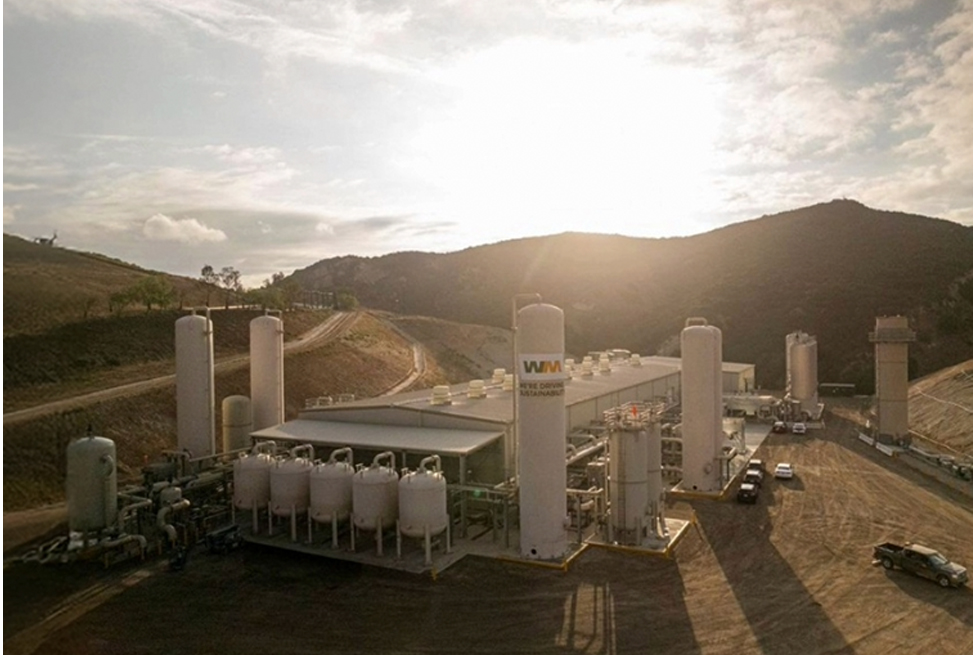
Southern California Gas Company reached a significant milestone earlier this year when it integrated renewable natural gas from the newly established WM Simi Valley RNG Facility into its distribution system.
The interconnection marks the first time the utility has successfully connected a landfill-based RNG project directly to its pipeline network, opening new pathways for lower-emission energy delivery for homes, businesses and transportation fleets. The interconnection also offers valuable insights for other gas utilities pursuing similar decarbonization pathways.
“The successful interconnection of the WM Simi Valley RNG Facility represents another meaningful step in growing California’s renewable gas supply,” said Jawaad Malik, senior vice president, strategy and financial planning and treasurer at SoCalGas. “By collaborating early and often with our partners at WM, we were able to bring this project online safely and efficiently, showcasing how landfill-derived RNG can help cut emissions, strengthen energy reliability and support progress toward California’s climate goals.”
The Simi Valley project sources landfill gas from WM’s Simi Valley Landfill, which serves Ventura County and the west San Fernando Valley. That landfill gas is processed into pipeline-quality RNG at a dedicated 30,000-square-foot facility, and the RNG is then delivered into SoCalGas’s pipeline system for multiple end uses, including fueling heavy-duty compressed natural gas vehicles and providing low-carbon gas for residential and commercial customers. Because RNG is fully compatible with existing infrastructure, customers receive the benefit of cleaner energy without needing to make any changes to their appliances.
SoCalGas’s approach hinged on early and sustained coordination with WM to align system interconnection requirements, operational controls, and quality standards. Achieving this integration required:
- Technical alignment on gas quality and monitoring: The utility confirmed the landfill-derived RNG met pipeline specifications and could be reliably blended with conventional natural gas without disrupting system pressures or quality.
- Interconnection engineering and testing: Utility engineers worked closely with the project developer to design and certify equipment that safely interfaces with existing pipeline assets and meets regulatory and safety requirements.
- Stakeholder collaboration: Continuous engagement among SoCalGas, WM and regulators reduced implementation friction and supported transparent project design and permitting.
The Simi Valley interconnection underscores SoCalGas’s broader strategy to scale RNG as part of its emissions reduction goals. The utility aims to replace 20% of the natural gas delivered to core customers with renewable sources by 2030. It is already making measurable progress: About 5.5% of the gas delivered to core customers in 2024 came from RNG, marking a meaningful step toward meeting its long-term climate goals.
With more than $100 million invested in the WM Simi Valley RNG Facility—one of the largest in the facility owner’s portfolio and WM’s first RNG plant in California—anticipated production is approximately 2.2 million MMBtu per year. This volume has the potential to avoid up to 100,000 tons of greenhouse gas emissions annually, an environmental benefit equated to removing roughly 2,000 trucks from the road or powering about 65,000 homes.
Utilities considering landfill or other biogas interconnections can draw several actionable lessons from SoCalGas’s experience:
- Build flexible technical frameworks: Gas quality and interconnection standards must accommodate diverse RNG sources. Early definition of required specifications reduces surprises during commissioning.
- Treat system safety and reliability as foundational: Leveraging standardized interconnection designs and thorough testing supports new RNG sources being integrated without compromising pipeline integrity.
- Engage early with developers: Close collaboration with project developers helps clarify expectations, streamline permitting and align infrastructure timelines.
- Supportive policy environments matter: Programs such as California’s Biomethane Monetary Incentive Program and the state’s renewable gas standard help utilities justify investment, support RNG market development, and meet climate mandates.
SoCalGas’s pipeline now receives RNG from multiple production facilities, including dairy clusters and green waste projects, illustrating the growing maturity of the RNG market.
The successful interconnection of a landfill-based RNG source into SoCalGas’s pipeline network demonstrates a model for integrating renewable gas resources while maintaining system performance and supports broader clean energy transitions for natural gas utilities nationwide.