Not Lost in Translation
Not Lost in Translation
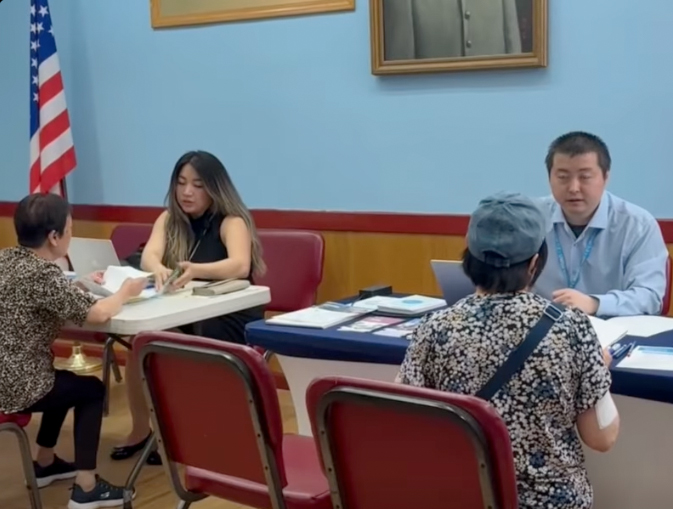
An outreach event held at the Chinese Community Center in Manhattan’s Chinatown exemplifies how Con Edison is committed to serving all customers—including those who may face language or financial barriers—by delivering vital information in the communities where they live.
Recently, Con Edison staff met face-to-face with Mandarin- and Cantonese-speaking residents to answer questions about energy bills and share details about cost-saving resources, such as the Energy Affordability Program (EAP). The EAP helps income-eligible customers reduce their energy bills through monthly discounts on both natural gas and electric charges. Eligibility is automatic for customers receiving certain government benefits—such as the Home Energy Assistance Program (HEAP), Supplemental Nutrition Assistance Program (SNAP), Supplemental Security Income (SSI), Temporary Assistance for Needy Families (TANF), Safety Net Assistance, Medicaid and more. For others, an easy application process is available in multiple languages, including Chinese.
At the Chinatown event, Con Edison representatives distributed translated application forms, explained eligibility criteria and helped customers navigate both automatic enrollment and self-application options. Attendees learned how to log in to “My Account,” check their bills for an “Energy Affordability Credit,” or apply online or via paper forms with supporting documentation. “By communicating openly with our customers, we can help them use energy more efficiently,” said Kimberly Williams, Con Edison’s director of regional and community affairs in Manhattan. “That helps them save money on their energy bills, giving them more to spend on other household expenses and activities that bring happiness to their lives.”
Following enrollment, customers may receive substantial discounts—up to $173 per month—depending on income level and HEAP benefit tier. Additionally, the EAP includes automatic enrollment in Budget Billing, which helps smooth out seasonal spikes by averaging energy payments throughout the year.
Con Edison has rapidly expanded its support to low-income customers. In 2024 alone, the utility provided $311 million in EAP discounts to income-eligible customers—an increase of more than 80% since 2022. Through these efforts, Con Edison continues pursuing a key policy goal: reducing utility costs to no more than 6% of a household’s income, aligned with New York State’s Energy Affordability Program standards.
Beyond bilingual materials, the Chinatown outreach included real-time interpreters and staff fluent in Mandarin and Cantonese, making it easier for residents—many of whom are elderly—to understand their rights and benefits. “I’m able to talk to people about energy-saving tips that may be helpful to them,” said Kalila, a Con Edison customer outreach senior specialist who was born in New York but attended Cantonese language school as a child and who represents Con Edison at events like this one.
This approach also aligns with Con Edison’s broader clean energy and affordability strategy. The company invested significant funds in energy efficiency programs, offering more than $161 million in incentives in 2024 for both natural gas and electric customers—including $80 million dedicated to low- and moderate-income households—and accelerated the expansion of its clean energy infrastructure while prioritizing equitable access.
Con Edison’s Chinatown outreach offers a valuable blueprint for other utilities. Meeting customers where they are—both physically and linguistically—can be the difference between programs going underused and programs transforming lives. By investing in multilingual resources, partnering with trusted community organizations and simplifying enrollment processes, utilities can break down barriers that often prevent vulnerable populations from accessing affordability programs. Just as importantly, showing up in person builds more trust than any flyer or website alone can deliver. For utilities striving to increase equity, improve program participation and strengthen customer relationships, Con Edison’s model demonstrates that accessibility and community partnership are essential strategies for success.