Recruit and Retain
By Robert Bittner
A 2024 Brookings Institution report noted that energy employers are projected to need 32 million hires between 2025–2035, the equivalent of 17 million new jobs and 15 million replacements from retirement and attrition.
Every one of those hires must come from somewhere—and natural gas utilities are increasingly building that pipeline themselves: recruiting earlier, training more deliberately and drawing from under-explored talent pools.
Tell Your Strongest Story
Atmos Energy designed its recruitment efforts to develop a workforce that reflects the 1,400 mostly rural communities it serves. The company advances this goal, in part, through a robust internship program, according to Shelly Mullins, director of compliance and talent acquisition: “Our internships for the exiting college graduate—or high school senior that maybe is technically capable and not college bound—have been very successful for us.”
Mullins believes that storytelling is at the heart of the talent-acquisition process, by which she means highlighting the aspects of Atmos Energy that resonate most with potential hires. That includes a stable, multigenerational workplace with many opportunities to grow. It also includes a good company culture. “As so many business leaders say, ‘Compensation will get talent in the door, but culture will keep them there,” added Kelli Martin, vice president of workforce development.
To instill that culture, the company emphasizes five principles: Inspire Trust, Be at Your Best, Bring Out the Best in Others, Make a Difference, and Focus on the Future. Those principles are presented during every employee’s onboarding and as part of Atmos Energy Essentials training and are frequently referenced throughout employees’ tenure.
Atmos Energy’s Culture Council helps to keep a pulse on the principles’ efficacy. “The Culture Council takes leaders from across the enterprise, representing each of our operating divisions and our shared-services groups, and tasks them with regularly checking in with employees,” Martin explained. “For example, we did an employee-engagement survey in 2019. So, we might pick a question from that survey and say, ‘Back in 2019, this is what we heard. How are things going now?’”
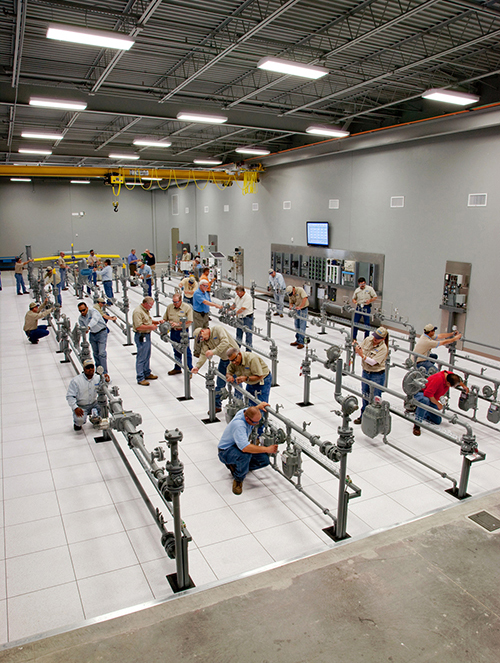
Field mentors also help to strengthen culture while delivering one-on-one training, which aids retention. “We could still transfer knowledge through the traditional class setting,” Martin said, “but we also wanted to provide valuable hands-on training. Because our operations crews in the field were essential workers who never stopped working, we created field mentors, which put experienced folks in the field with newer hires. It was invaluable to have an experienced person take newer hires through the hands-on exercises.”
The utility continues the program today as part of its comprehensive training experience.
These efforts might not seem revolutionary on their own. Together, however, they have helped to produce undeniable results. “Our turnover rate is three times below the national average,” Mullins said. Atmos Energy reports an 11-year average employee tenure, compared with four years for U.S. businesses in general, and its 2023 retirees had an average tenure of 32 years.
Attract and Inform Future Workers
While retention is essential for a stable, knowledgeable workforce, it only matters if there are engaged employees to retain in the first place. Pennsylvania-based PECO has been working to attract and inform potential workers through its Infrastructure Academy, a free, multiday event that introduces community members to PECO careers through mock interviews, hiring-process walkthroughs and hands-on demonstrations of various roles. According to Senior Manager of Workforce Development Eric Nash, the 2025 event had 161 attendees. At the time of this publication, PECO was scheduled to host its eighth academy in September.
The academy is a significant undertaking, requiring numerous workstations, snacks and typically 50 to 75 PECO volunteers—diverse in age, gender, race and company role—to run demonstrations and other activities for the 150 to 200 attendees each year. While the numbers on attendee hiring can be difficult to pin down—particularly since industry jobs may involve other utilities—PECO says it has hired 72 people into permanent trade positions since the academy began in 2020.
The success of the Infrastructure Academy has spawned two offshoots: Junior Infrastructure Academy and Educators Infrastructure Academy. This year, PECO hosted its fourth Junior Academy, a one-day event tailored to high school students. “Each year we hold the event in a different county, inviting up to 10 schools from that county to participate,” Nash explained.
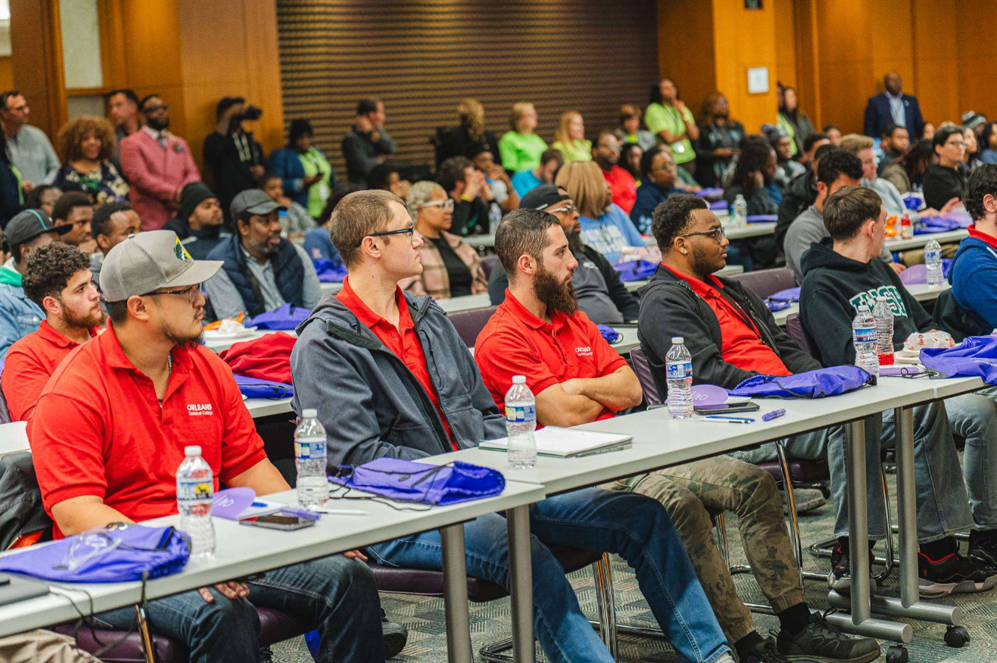
“Educators Infrastructure Academy will be focused solely on high school and trade school teachers,” Nash continued. “We’ll talk about how to integrate energy education into their curriculum as well as the basic skills needed in our industry. Our community partner Beyond Literacy will provide an overview of entry-level exams, and many of the activities we offer at the Infrastructure Academy will be available at the Educators Infrastructure Academy.” The inaugural event was scheduled for late August.
Nash believes exposure to events like the academies can help people discover “life-changing, wage-sustaining jobs.” That makes it worth the four months to six months of planning, building community partnerships and preparing volunteers—not to mention the cost.
“We’re here to serve our communities and invest in the communities we serve. Each time someone is hired from an event like the Infrastructure Academy, that’s the return on equity that we put out there,” said Nash. “And then that person becomes an engaged, great employee here, and the cycle pays for itself. It feels so rewarding to be able to help our communities with meaningful employment.”
Build a Pathway
Of course, programs like Infrastructure Academy are not the only way individuals can prepare for positions within a gas utility. A growing number of utilities are finding that military service experience can make veterans and soon-to-be veterans ideal candidates for energy careers.
“Southern Company views veterans as a critical part of the workforce strategy, not just a hiring initiative,” said Landon Copus, Southern Company’s military recruiter and a U.S. Navy veteran. “The energy industry is built on values that align closely with military service, including safety, teamwork, discipline, technical expertise, accountability and commitment to the mission. These are things veterans can bring to the table immediately, day one. Our goal is to help translate their skills and experience into our civilian workforce language, giving veterans a pathway where they can be successful serving in a different capacity.”
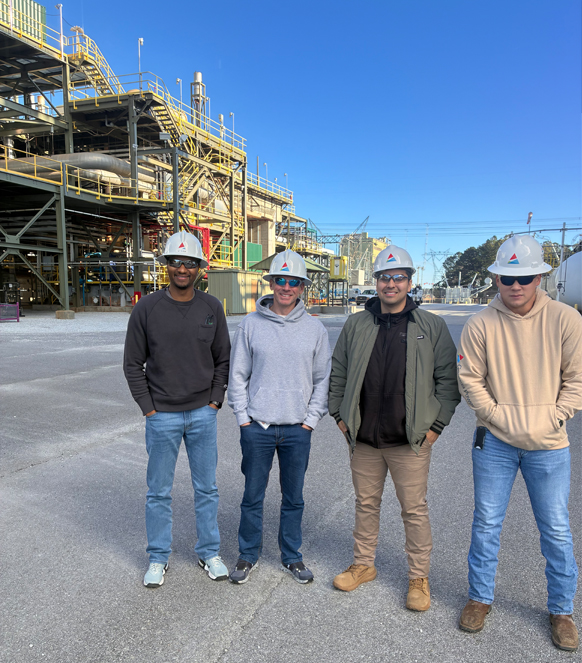
But recruiting effectively from the military requires more than posting a job listing that says, “We hire veterans.”
“Successful veteran hiring requires intentional engagement,” Copus added. “We’re constantly improving how we engage transitioning service members, reservists and National Guard members and how we help our hiring managers to better understand military backgrounds and experience.”
Those efforts have also paid off: Southern Company ranked No. 1 on the 2025 Military Times “Best for Vets: Employers” list.
The process starts when qualified, vetted military personnel are invited to join SkillBridge, Southern Company’s unique, 180-day internship program for service members leaving active duty.
“SkillBridge immerses service members into what to expect—not only within the civilian world but with a career at Southern Company,” said Copus, the program’s manager. “When someone is accepted into the program, we house them in company lodging, and they get the full experience of whatever role they’re in. When their chain of command approves SkillBridge, they’re released from military obligations. They’re still in the military, still active duty, still being paid by the military and on full military health insurance. But they are not required to show up in person.”
Such an immersive trial period gives service members and the company an opportunity to ensure the fit is right. “They get to see what a career with Southern Company would look like, while we get to see their skills, their work ethic, their attitude and their ability to contribute. Our ultimate goal, of course, is to convert,” he continued. “For calendar year 2026, we’re expecting to be around 75% to 80% conversion to full hires.”
Even better, those hires typically stay. “I think it’s relatively easy for military personnel to adapt to Southern’s company culture,” Copus said. “This is a very military-populated company. There is always somebody checking to make sure you’re adapting, that your family is OK. This place stands with you throughout the entire process.”
Copus is enthusiastic about what the industry holds for those who choose to make it their own. “The energy industry is entering a very exciting time,” he said. “Attracting the next generation of talent is critical. Their experience and leadership will help us continue to deliver the reliable energy our communities depend on.”
Another Resource for Recruitment
Not every utility is able to devote resources and personnel to ongoing recruitment, especially where qualified, committed hires may be in short supply. That’s where the Center for Energy Workforce Development can step in.
CEWD is a national nonprofit connecting employers, labor, educators, energy associations, community-based organizations and other stakeholders to support career awareness, education and training on behalf of the entire energy industry. Kristie Kelley, senior director of workforce development, said CEWD is focusing on educating young people about the industry, with the goal of developing a talent pool “large enough so that each of our partners—gas, electric, nuclear or something else—can have enough talent to choose from when filling their positions going forward.”
For example, CEWD has created educational resources that states are incorporating into their high school and technical school curricula. “Our Energy Industry Fundamentals curriculum can be used as a foundational course that any learner—ninth grade and above, including incumbent workers—could participate in and learn how they can help to drive the future of energy,” Kelley said.
Twenty-nine states have adopted the curriculum as of July, with 13 more in process. “By encouraging and equipping teachers to present this information, we can help to build that diverse talent pipeline to all the career opportunities in the industry,” she added.
CEWD’s online platform, EnergyConnector, also helps connect utilities with schools and other training providers. “Maybe they can provide a guest speaker for an event, help with a career fair, or donate equipment or other resources,” Kelley explained. Taking advantage of such opportunities strengthens ties with local employers while bringing real-world perspectives into educational settings.
To date, nearly 5,000 learners have already earned the EIF certificate of completion. As for EnergyConnector, Kelley reported, “More than half of our partners have registered for the platform, and we have several hundred educators across the country enrolled.”