Risk and Reward
By Maura Keller

Risk and Reward
At a time when global energy markets are evolving rapidly and capital is flowing toward new technologies and infrastructure, natural gas utilities remain a cornerstone investment for many institutional and individual investors. Known historically for stable earnings and reliable dividends, the sector is drawing renewed attention for a broader set of reasons—from disciplined risk management and infrastructure growth to rising demand and the long-term value of energy assets.
Even as the energy landscape becomes more complex, industry leaders say the combination of financial predictability, operational expertise and strategic investment opportunities continues to make natural gas companies attractive to investors.
Well-Established Stability
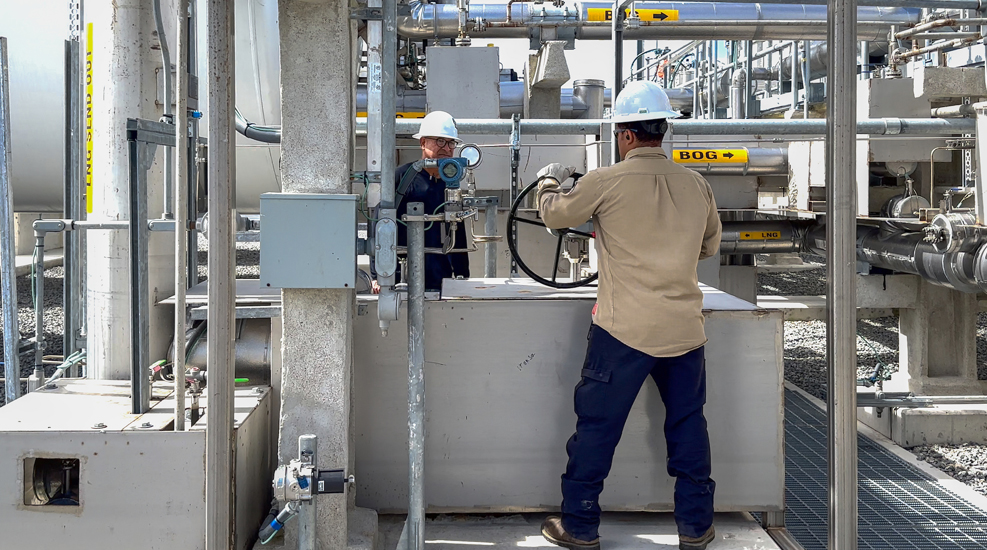
For many investors, the appeal of natural gas utilities begins with stability. Utilities have long been viewed as steady performers compared with more volatile sectors, but industry experts emphasize that this consistency is the result of disciplined operational strategies designed to manage risk and deliver predictable performance over time.
Hyung Lee, project engineer and member of the gas portfolio management team at Memphis Light Gas and Water, says sophisticated risk management tools play a critical role in protecting both customers and investors from market volatility. MLGW developed its Strategic Hedging Program after recognizing the need for a more focused approach to managing natural gas price risk.
“Before the inception of MLGW’s Strategic Hedging Program, our approach to hedging relied heavily on a diversified mix of futures, call options and market exposure to natural gas,” Lee explains. “After experiencing a few years of inconsistent performance, we recognized the need for a significant shift.”
The program relies on out-of-the-money call options to protect against dramatic price spikes. By establishing a fixed budget for option premiums and targeting an average winter gas bill level, the utility limits the impact of extreme price volatility.
“Our Strategic Hedging Program is like a finely tuned machine designed to bring predictability and peace of mind to our customers,” Lee says. “This strategic approach ensures that our customers’ natural gas bills remain stable and predictable, even in the face of lasting market fluctuations.”
That predictability proved particularly valuable during the significant market conditions of 2022. MLGW had purchased call options years earlier in anticipation of potential market disruption. When geopolitical tensions—including the conflict between Russia and Ukraine—triggered global natural gas price spikes, those options became highly valuable.
“The call options we had in place not only provided protection but also generated nearly $60 million in benefits for our customers,” Lee says.
From an investor perspective, programs like this signal a disciplined management culture capable of navigating uncertainty. While utilities are sometimes described as “boring but steady” investments, Lee notes that reliability is exactly what many investors seek.
“Without a clearly defined and expertly executed hedging strategy to shield against soaring energy costs, the business landscape becomes significantly riskier,” he says. “It’s the unwavering focus on stability, predictability and consistent growth that forms the cornerstone of a utility’s long-term success.”
Leadership and governance also play an important role in sustaining investor confidence. Hedging programs and other financial strategies require oversight from executive teams and governing boards to ensure they remain aligned with long-term goals.
“The leadership team has been instrumental in crafting and executing our innovative hedging program,” Lee says. “Their active communication and involvement have been pivotal in allowing us to navigate strategic shifts and continue delivering measurable value.”
Trends and Continued Support
While operational discipline remains central to investor confidence, broader market trends are also shaping the outlook for natural gas companies. Lucia Dempsey, head of investor relations at Chesapeake Utilities Corporation, says investor sentiment toward natural gas has strengthened in recent years as policymakers and financial markets increasingly recognize its role in supporting economic growth and energy reliability.
“Investors and the financial community overall are much more supportive of natural gas and the critical role it plays in supporting long-term domestic economic growth,” Dempsey says.
Although renewable energy continues to receive strong backing, many investors have increased confidence in natural gas as a long-term component of the energy mix. Jairo Chung, vice president and senior credit officer in the Power and Infrastructure Finance Group at Moody’s Ratings, says perceptions of natural gas utilities have shifted noticeably.
“We used to get questions from investors asking whether the [local distribution companies] will be around for the next 15 to 20 years and what would happen to the remaining book value of their assets and infrastructure,” Chung says. “These questions stemmed from a thought that state, utility and investor carbon transition goals were existential threats to gas utilities.”
More recently, concerns about affordability and reliability have reshaped the conversation. “Over the last two to three years, affordability and reliability concerns have helped change views on natural gas,” Chung says. “Today, natural gas is thought of as more than just a bridge fuel and now as the primary fuel to supply higher power demand growth across the U.S.”
Infrastructure investment remains a major driver of investor interest. Natural gas utilities across the country are investing heavily in replacing pipelines, strengthening system reliability and expanding service to growing communities.
“Infrastructure replacement, strengthening and new development are the key drivers for growth across many local distribution companies,” Dempsey says. “Reliability-related investments are a stable, predictable form of growth that is typically supported by regulatory mechanisms that ensure effective cost recovery.”
Adds Chung, “Modernizing the system is another way natural gas utilities are investing in their infrastructure.”
These upgrades also support broader economic expansion. As electricity demand rises due to new technologies and industrial development, natural gas infrastructure plays an important supporting role. “Natural gas needs to be transported and distributed as feedstock to support additional electric load coming from new data centers and other industrial growth,” Chung explains.
The rapid expansion of data centers, artificial intelligence applications and electrification initiatives is significantly increasing power consumption across the United States, creating additional opportunities for natural gas utilities to invest and grow.
“We continue to see investor interest from several different perspectives,” Dempsey says, noting that investors range from traditional utility specialists seeking reliable income to generalist investors attracted by infrastructure growth and rising demand.
Financial metrics also remain central to investor evaluations of natural gas companies. Historically, utilities with annual earnings growth in the 4% to 6% range were considered strong performers, but many companies now project higher growth rates as capital investment programs expand. “Many companies are now forecasting earnings growth of 8% or more,” Dempsey says.
The Role of Credit
From a credit perspective, however, stability remains the primary expectation among fixed-income investors.
“We assess the natural gas utilities’ creditworthiness by considering cash flow to debt or leverage metrics,” Chung says.
“For LDCs, fixed income investor expectations haven’t changed much. They expect to see a stable credit profile and manageable leverage supported by consistent regulatory environments.”
Investors also continue to value the reliable dividend payments that have long defined the sector. According to Dempsey, many investors seek a balanced combination of earnings growth and dividend growth. “Investors are looking for consistency in payouts and growth rates, along with a track record of raising the dividend each year,” she says.
Ultimately, the enduring appeal of natural gas utilities lies in their ability to balance stability with opportunity. Risk management strategies—such as the hedging programs implemented by companies like MLGW—demonstrate how utilities protect customers and investors from volatility while continuing to invest in infrastructure that supports long-term growth.
For investors navigating an increasingly complex energy landscape, that combination remains compelling. As Lee puts it, the processes utilities put in place to manage risk and deliver consistent performance “are constructed to maximize steady performance, making our approach invaluable in an industry known for its unpredictability.”