The Affordability Story
By Liisa Andreassen
Americans are worried about their energy bills.
The Pew Research Center reported in May 2026 that three-quarters of U.S. adults say their home energy costs have risen in recent years, including 42% who say the costs have gone up a lot. Residents in the Northeast feel it most acutely, with 56% reporting significant increases, compared with roughly 4 in 10 in the Midwest and South. Asked why, 64% named utility companies wanting to make more money as a major reason—a significant trust problem that is arriving just as natural gas utilities have a genuinely compelling story to tell about affordability, reliability, safety and innovation.
Backed by data, the American Gas Association’s 2026 Playbook offers that story. More than 189 million Americans and 5.8 million businesses rely on natural gas every day, and utilities are adding more than one new residential customer every minute. Natural gas may represent the first 5% of the economy, as the playbook notes, but it makes the remaining 95% possible. The challenge—and the opportunity—is making sure customers know it.
Lower Bills: The Numbers Don’t Lie
The clearest case for natural gas is the one that hits customers’ wallets. According to the playbook, homes that use natural gas for heating, cooking and clothes drying save an average of $1,030 per year compared to homes that rely on electricity for the same applications. Over the past decade, those savings have added up to $99 billion for families and more than $655 billion for businesses. Consumer preferences reflect this reality: The playbook finds that Americans prefer natural gas over electric heat pumps by a ratio of 4 to 1.
New research from Southern California Gas Company illustrates what gas infrastructure means for household budgets over the long term. A report released in April 2026 found that, adjusted for inflation, SoCalGas’ average residential natural gas rates declined by approximately 25% between 2000 and 2023—a remarkable trend given the broader trajectory of energy prices. The report, The Affordable Way for California, credits the supply flexibility and underground storage capacity of the natural gas system with acting as “a stabilizing force that helps limit price volatility and ease pressure on household energy budgets.”
For Kevin Barker, SoCalGas’ senior manager of government relations, that report has become the backbone of how the company talks to customers about cost.
“SoCalGas focuses on leading with facts and real-world context,” Barker said, pointing to a sustained social media campaign built around concrete data points—chief among them that 25% rate decline—alongside energy efficiency programs and the underlying system performance that keeps prices more stable over time.
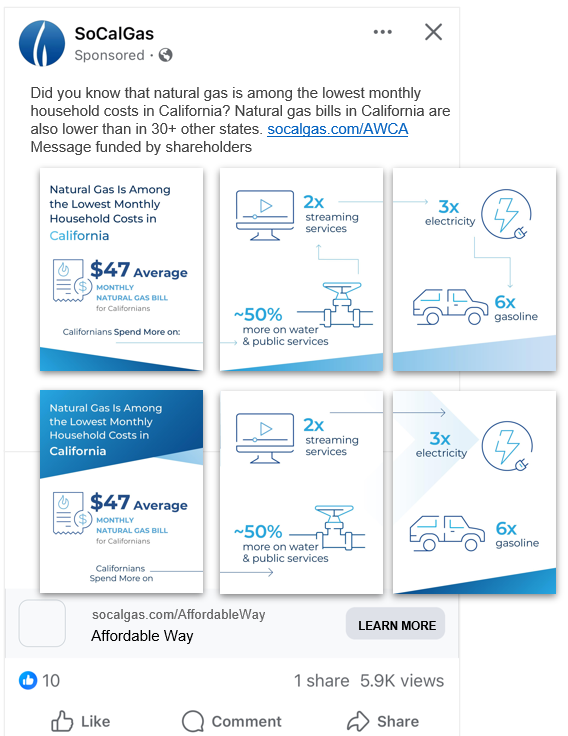
Consistency, Barker said, is the point. With so much information competing for attention, SoCalGas repeats the same core message across every channel it controls, presenting data clearly and visually so the facts cut through the noise. His advice to other natural gas utilities making the affordability case is to start with what’s happening in the real world, stick to measurable outcomes, avoid broad claims and tie near-term bill savings to longer-term system performance for a more cohesive, credible story.
That stabilizing function was tested during a major winter storm in January 2026. During the storm, natural gas deliveries into California fell sharply—but underground storage stepped up, supplying nearly 60% of system demand at the storm’s peak and helping avoid an estimated $120 million in potential energy cost impacts for customers. It’s a concrete example of how infrastructure investment protects customers from the volatile bill spikes that erode trust across the energy sector.
Reliable When It Matters Most
Affordability and reliability are inseparable. A utility that can’t deliver energy when customers need it isn’t affordable—it’s just cheap until it isn’t. The playbook emphasizes that natural gas reliability is “the result of long-term planning, infrastructure investment and operational discipline across an energy delivery system built to serve customers in every season.” Member utilities are doing that work every day—not just maintaining infrastructure but continuously improving it.
Liberty Utilities in New Hampshire operates around the clock from a local Gas Control Center in Londonderry, monitoring the distribution system and fielding emergency calls 24/7. The company replaces approximately 15 miles of cast-iron and bare-steel gas mains with plastic piping every year, improving its environmental profile and keeping service uninterrupted—a discipline that makes zero interruptions to service not just a goal, but a track record.
Puget Sound Energy in Washington state takes a similarly proactive approach across its 26,000-mile network, serving nearly 900,000 natural gas customers in six counties. PSE conducts leak surveys of its entire system at least once every three years, exceeding federal and state minimum standards. PSE also implemented a “find-it-fix-it” emissions program several years ago with a target of completing the repair of any newfound nonhazardous emissions within 30 days.
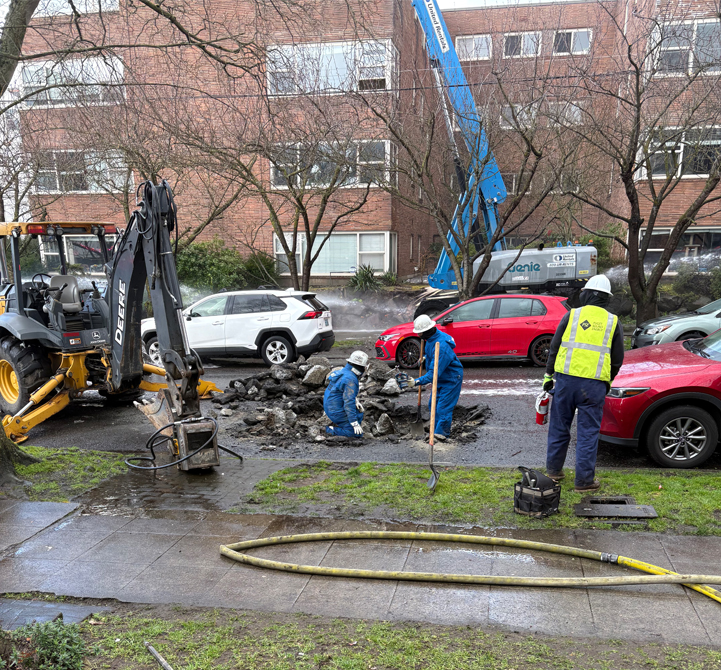
Additionally, PSE has already replaced all cast-iron and bare-steel pipelines in its system and is proactively upgrading other infrastructure before problems can develop.
The value of that investment becomes most apparent in extreme conditions. “As a winter-peaking utility, we know customers depend on natural gas most when the temperature plummets,” said Ryan Murphy, PSE vice president of electric and gas operations. “During an extreme cold snap in January 2024, for example, natural gas and other dispatchable resources ran continuously throughout the three-day event, playing a critical role in helping keep nearly 900,000 households warm when demand reached record levels.”
These investments don’t exist in isolation—they also support safety. The playbook notes that America’s natural gas utilities collectively invest $37 billion annually to enhance the safety of distribution and transmission systems, supporting ongoing modernization and integrity work.
Innovative: The Future Is Already Here
The playbook also notes that emissions from natural gas distribution systems have declined 70% since 1990—and that utilities have achieved nearly 50% growth in supply since 2006 while keeping prices stable. Innovation is how that progress happens.
National Grid, serving more than 20 million customers across New York and Massachusetts, is investing aggressively in biogas as a decarbonization pathway. According to Sustainability magazine, Don Chahbazpour, National Grid’s director of policy and regulatory strategy, describes biogas and renewable natural gas as uniquely valuable tools in the clean energy transition—not just for their emissions benefits, but for their compatibility with existing infrastructure and ability to serve hard-to-electrify loads.
Chahbazpour shared the example of an AstraZeneca project, which, by the end of 2026, is expected to enable as much as 650,000 MMBtu—or 190,500 megawatt-hours—of RNG per year across AstraZeneca’s U.S. sites, equivalent to the energy needed to heat more than 17,800 homes for a year. In another example, L’Oreal USA is also sourcing RNG from landfill gas projects in Texas and New York to displace fossil-based gas in industrial applications.
Chahbazpour has noted that biogas remains underutilized partly because it lacks the visibility of wind and solar and partly because corporate accounting frameworks haven’t kept pace with its decarbonization potential. National Grid is working to change that by demonstrating what a gas network with a growing share of renewable supply can look like.
Duke Energy Florida took a significant step forward in January 2026, unveiling the DeBary Hydrogen Production Storage System—the first U.S. demonstration project capable of producing, storing and combusting up to 100% green hydrogen in an end-to-end system, from solar generation through electrolysis to an upgraded combustion turbine that can run on natural gas, hydrogen or a blend of both.
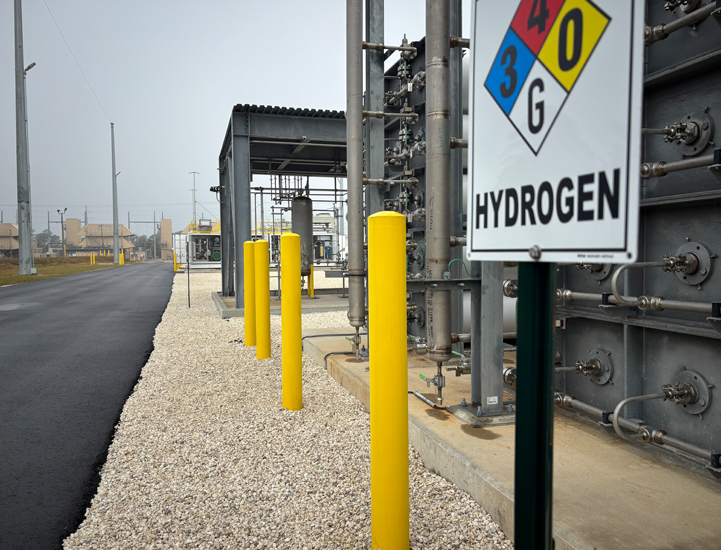
Natural gas plays a central role even though DeBary is fundamentally about electric generation. Existing turbine infrastructure was adapted using GE Vernova technology, making gas-fired generation more flexible and better able to complement renewable expansion. The turbines can be called on at any time, regardless of weather or time of day—the kind of on-demand reliability intermittent renewables cannot provide.
That relationship between natural gas dependability and renewable growth is something Duke Energy Florida is living out across its entire generation fleet. Marty Drango, general manager of Duke Energy Florida’s Bartow Power Plant in St. Petersburg, describes it as a virtuous cycle.
“Solar energy sites operate at full capacity when the sun is shining during the day. So, when it’s nighttime or there’s a thunderstorm rolling through, natural gas plants can kick in to help balance high demand on the electric grid. Basically, when our natural gas plants are operating efficiently and effectively like they are, we can confidently build more solar energy sites. And that’s great for our customers because there aren’t any fuel costs with solar energy,” he said.
The payoff is already materializing. Duke Energy Florida recently completed four solar energy sites in Madison, Hernando and Sumter counties projected to save customers $1 billion from displaced fuel costs. Natural gas didn’t impede that expansion; it enabled it.
The Communication Imperative: Closing the Trust Gap
None of this good work matters if utilities can’t communicate it. The Pew data on consumer sentiment should serve as a wake-up call. The affordability message isn’t landing, regardless of what the data shows.
Richard Yost, a principal at YSG and former communications director at Baltimore Gas and Electric, laid out the challenge plainly in an April 2026 piece in Utility Dive. After spending more than a decade explaining BGE’s ever-increasing bills to customers, Yost concluded that most utilities are getting customer communication wrong—not because they lack good news to share, but because they’re still broadcasting mass messaging when they should be having personalized conversations.
The barrier, Yost said, is less about willingness than scale. Many utilities sit on enormous customer bases and an even larger amount of data, and reaching each customer with something timely and relevant requires pulling from multiple systems, empowering customer-facing teams to dig deeper when needed, and leadership willing to “own the bad with the good.” It also requires a mental shift, Yost argued, from a compliance-first posture to one built around meeting customers where they are now.
For example, translate infrastructure investment into language customers care about. “Building the grid of the future” means nothing to a customer worried about this month’s bill. But “these gas mains in your neighborhood are being replaced because it will help keep your service uninterrupted this winter” lands differently.
“Customers expect more than ever before,” Yost said, “and a compliance-first mindset will set up any organization for failure.”
Yost is just as direct about what success looks like. The clearest warning sign of eroded trust, he said, is a customer who feels they have no choice but to escalate to the media, a regulator or a politician to get answers. Personalized outreach should show that a utility understands a customer’s situation and is offering some form of help—even when there’s no easy fix—since simply acknowledging a hard situation starts a conversation. The metrics that matter go beyond complaint volume. Increased engagement with utility programs, fewer call-center calls and fewer escalations to third parties are all signs that trust, not just silence, is growing.
Reaching the most vulnerable customers carries its own complications, since the customers most likely to need help are also the hardest to reach through conventional channels. Yost called connecting with them a top priority precisely because utilities operate as a monopoly with no real alternative for service.
Digital tools remain useful. BGE’s research found low-income and non-native English-speaking customers heavily reliant on mobile phones, making text messaging a viable channel, but digital isn’t the only answer. During one of the coldest winters in decades, BGE mailed personalized letters to every customer to help them manage usage and anticipate bills, and utilities can equip community-facing representatives with customer data to offer help in person, neighborhood by neighborhood.
“It takes extra work and a willingness to do right by all customers,” Yost said, “but it’s possible.”
The Story Is There — Tell It
The playbook gives the natural gas industry a clear, data-driven framework. Natural gas keeps bills lower, delivers unmatched reliability, leads on safety and is driving genuine innovation, backed by member utility work.
The harder part isn’t finding the story but telling it in a way that customers can relate to. As Yost said, “The companies that are strategic about using their customers’ data to improve their outreach will lower the temperature for their next rate case, in their statehouses and in the court of public opinion.”
So, at a time when most Americans report higher energy costs and blame utility companies for it, there’s a meaningful opportunity to change that narrative with substance rather than spin.
And natural gas is the lead character in that story. According to the AGA Playbook, natural gas is projected to be one-half to one-third the price of other fuels through 2050. That is the kind of affordability that families need. Now, with a more favorable administration in place, natural gas utilities have a key opportunity to capitalize on our nation’s abundant natural resources and reliable energy infrastructure, helping to satisfy growing energy demand while ensuring prices remain stable and affordable.